
There are numerous reasons to participate in a fitness program. For some of us it may be to lose a few pounds and have more energy, while others may simply want better overall health. As a result, most of us follow a program that consists of a combination of strength training and cardiovascular conditioning. And justifiably so! There are many physical benefits to both and they should be a major part of every fitness routine. However, one important area that often gets overlooked is balance. Balance enables a person to maintain their center of gravity during movement and in stationary positions. This can be the case during a sporting event or in simple day to day activities. Also, improving balance can help increase joint stability, improve posture, and increase overall strength. And even better, it's easy to work into your existing routine! But before diving right in, there are three things we need to remember when training for better balance.
Read More
Monday, November 29, 2010

Friday, August 13, 2010
Speed and Power Anyone?

Many of us enjoy watching athletes perform amazing physical feats. Whether it's Usain Bolt screaming down the track during the Olympic Games or Serena Williams hitting a rocket serve at Wimbledon, we can't help but marvel at their athleticism.
The fact is, many of us are athletes at heart. And we can use some of the training methods the pros use to improve our overall fitness.
Read full article
Friday, June 4, 2010
Suspension Training
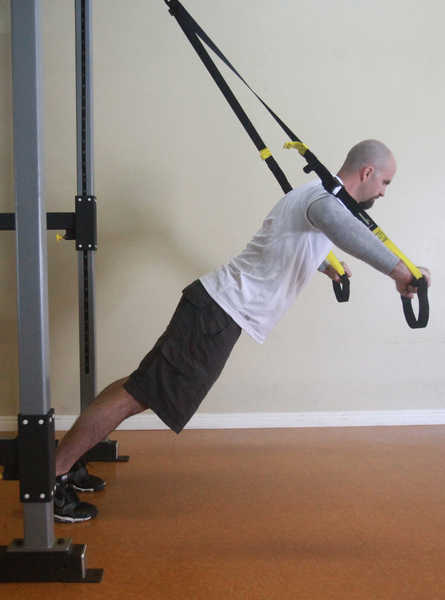
Summer means kids at home, vacations and maybe increased travel for work. Combine that with the fading memory of your resolution to get fit, and it becomes challenging to find the drive and time to exercise on a regular basis.
It's time to get creative. Try a new fitness routine. Read full article.
For video clips of the exercises in this article click here.
Sunday, March 28, 2010
Short On Time? Try a Full Body Workout!

Full-body exercises place an emphasis on multiple areas of the body during one exercise. They are being used more by fitness enthusiasts and are popular for a variety of reasons.
Read More...
Wednesday, February 3, 2010
Fitness can happen outside of the gym!

I've always encouraged my clients to find activities they enjoy and to gear their workout regimine towards improving recreational fitness. A study review published in Science Daily found significant health benefits for inactive individuals who started participating in soccer two times per week. Benefits included, a decrease in blood pressure, resting heart rate, and body fat percentage. It just goes to show that fitness can happen outside the walls of a health club!
Click here to see the full article.
Monday, January 25, 2010
Mama Said Knock You Out!
"M.S.K.Y.O"
Part 1
5 Rounds on Heavy Bag @ 3 minutes each with 1 minute rest b/w rounds.
Part 2
Flustercuff - 4 sets of 5 reps, with 20-40# dumbbells.
Cooldown/Stretch - 5 to 10 minutes
Monday, January 18, 2010
Cardiovascular Tips

Whether your a gym rat or just starting a program, these guidelines can help take your fitness to greater levels!
Click here to find out more...
Monday, January 11, 2010
"Champ"
Warmup - 5 minute light jog/brisk walk & 1 set of the following
- pushups w/rotation x 10
- alternating lunges x 10/leg
- med ball swings 6#-10# ball x 20
- med ball torso rotations 6#-10# ball x 15/side
- squat row x 20 reps
- 1 minute of light sparing on heavy bag
Workout - 25 minutes total (Includes Rest)
Part 1 - Do three rounds of the following with 1 minute rest after each round
1. Heavy Bag - for 1 minute
2. BB Deadlift/Row Combo - 40-50% of Deadlift 1RM, for 45 seconds w/15 second transition time to the next exercise
3. Ring Pushups - for 45 seconds w/15 second transition time
4. BB Squats - same weight as the deadlift/row combo, for 45 seconds w/15 second transition time.
5. Split Jumps - for 1 minute
Part 2 - Two 3 minute rounds on the heavy bag w/1 minute rest between rounds
Cooldown - Static/Passive Flexibility
- pushups w/rotation x 10
- alternating lunges x 10/leg
- med ball swings 6#-10# ball x 20
- med ball torso rotations 6#-10# ball x 15/side
- squat row x 20 reps
- 1 minute of light sparing on heavy bag
Workout - 25 minutes total (Includes Rest)
Part 1 - Do three rounds of the following with 1 minute rest after each round
1. Heavy Bag - for 1 minute
2. BB Deadlift/Row Combo - 40-50% of Deadlift 1RM, for 45 seconds w/15 second transition time to the next exercise
3. Ring Pushups - for 45 seconds w/15 second transition time
4. BB Squats - same weight as the deadlift/row combo, for 45 seconds w/15 second transition time.
5. Split Jumps - for 1 minute
Part 2 - Two 3 minute rounds on the heavy bag w/1 minute rest between rounds
Cooldown - Static/Passive Flexibility
Friday, January 8, 2010
Why?

Talk about tempting fate! How does this make someone functionally stronger in the real world? Unless this is an extreme way to build pain tolerance for blunt trauma, I don't see much of a reward compared to the risk...call me a pansy! I think I'll stick to single leg squats or BB squats on a BOSU perhaps. The BOSU was invented because of jackasses like this guy!
The line between being a puss and just plane stupid isn't quite that thin. See you the ER tough guy...or funeral!
Friday, January 1, 2010
Happy New Year...Get to Work!
Today's Workout: Metabolic and Strength Focus
10 minute Kettlebell Complex - Courtesy of Mountain Athlete
16 kg KB - Men or 35 lbs. Dumbbell
8 kg KG - Women or 15 lbs. Dumbbell
Perform each exercise for 1 minute and hold the KB the entire 10 minutes
- 1 arm swing (left arm)
- figure 8s
- 1 arm swing (right arm)
- figure 8s
- 1 arm clean to press (left arm)
- slasher to halo
- combo forward and reverse lunge (left leg, holding KB in right arm)
- 1 arm clean to press (right arm)
- slasher to halo
- combo forward and reverse lunge (right leg, holding KB in left arm)
Rest 2-3 minutes then complete the following circuit for 2 sets. Perform each exercise for 1 minute with 1 minute between exercises. After the 1st set rest for 2 minutes then complete the last set.
- pullups
- sandbag or bb squats - 100# men/60# women
- pushup w/alternating db row - 35# men/15-20# women
- alternating bb lunge - 100# men/60# women
Stretch/cooldown 5-10 minutes (after you pick your lungs up off the floor!)
10 minute Kettlebell Complex - Courtesy of Mountain Athlete
16 kg KB - Men or 35 lbs. Dumbbell
8 kg KG - Women or 15 lbs. Dumbbell
Perform each exercise for 1 minute and hold the KB the entire 10 minutes
- 1 arm swing (left arm)
- figure 8s
- 1 arm swing (right arm)
- figure 8s
- 1 arm clean to press (left arm)
- slasher to halo
- combo forward and reverse lunge (left leg, holding KB in right arm)
- 1 arm clean to press (right arm)
- slasher to halo
- combo forward and reverse lunge (right leg, holding KB in left arm)
Rest 2-3 minutes then complete the following circuit for 2 sets. Perform each exercise for 1 minute with 1 minute between exercises. After the 1st set rest for 2 minutes then complete the last set.
- pullups
- sandbag or bb squats - 100# men/60# women
- pushup w/alternating db row - 35# men/15-20# women
- alternating bb lunge - 100# men/60# women
Stretch/cooldown 5-10 minutes (after you pick your lungs up off the floor!)
Monday, December 28, 2009
10 Keys to Success in 2010!
If you’re like most people, it’s the same scenario every year. The best intentions of resisting the holiday temptations are now a foggy memory. Often clouded by a month full of countless parties where over indulgence is the norm. But fear not! The New Year is just days away. As the calendar turns our resolve comes rushing back! It’s the opportunity for redemption that we embrace every year. However, the drive to make this year different can quickly fade if our goals are too generalized. Instead of falling back into the same rut by spring, take the time now to dig a little deeper and develop a game plan for year long success. Outlined below are 10 tips to guide you towards looking and feeling your best in 2010…and years beyond!
Read full article...
Read full article...
Wednesday, December 16, 2009
Calculating Target Heart Rate
First and foremost!!! I'm not a doctor...(Please try to refrain from inappropriate comments), just an information provider! Always consult your physician prior to beginning an exercise program! Okay, now that the disclaimer is out of the way...let's proceed!
So last week I touched base regarding the myth of the "Fat Burning Zone." The take home message was to realize that you need a mixture of cardio at various intensities and low intensity training is not the magic formula to fat loss.
Great! So now what?
First we need to know how to calculate our target heart rate. Our two options are the "Age Based Formula" and the "Karvonen Formula."
The Age Based Formula is rather simple. Subtract your age from 220 which give us an estimated maximum heart rate (MHR). Next, multiply the estimated MHR by 60 to 80%.
Hypothetically, let's say a 20 year old female wants to know 70% of her target heart rate. Here's how the calculation would look:
220 - 20 x .7 = 140 beats per minute (bpm)
While the Age Based Formula is simple, the level of intensity is often underestimated with this approach. The more common and accurate method used is the "Karvonen Formula."
The Karvonen Formula involves a 2 step process. The key distinction is the use of "Heart Rate Reserve (HRR) in the calculation." To find our HRR, subtract your age and resting heart rate (RHR) from 220:
Step 1: 220 - age - RHR = HRR
Now, using our 20 year old female, let's say her RHR is 60 bpm. This would give her a HRR of 140 bpm:
Step 1: 220 - 20 - 60 = 140 bpm
For step 2, we multiply 70% to the HRR then add her resting heart rate back in:
Step 2: HRR x Target % + RHR = Target HR
140 x .7 + 60 = 158 bpm
See the difference? With the age based formula, 70% of her target heart rate would be 140 bpm compared to 158 bpm using the Karvonen Formula. This makes a difference of 18 bpm. Plus, 140 bpm would only be 58% of target HR with the Karvonen Formula...pretty significant!
For quick reference, here's both steps of Karvonen Formula together:
Step 1: 220 - age - RHR = HRR
Step 2: HRR x Target % + RHR = Target HR
Now that we know how to calculate our target heart rate, next time we will discuss training at different zones and how to implement various intensities into your weekly cardio routine.
Stay Tuned!
So last week I touched base regarding the myth of the "Fat Burning Zone." The take home message was to realize that you need a mixture of cardio at various intensities and low intensity training is not the magic formula to fat loss.
Great! So now what?
First we need to know how to calculate our target heart rate. Our two options are the "Age Based Formula" and the "Karvonen Formula."
The Age Based Formula is rather simple. Subtract your age from 220 which give us an estimated maximum heart rate (MHR). Next, multiply the estimated MHR by 60 to 80%.
Hypothetically, let's say a 20 year old female wants to know 70% of her target heart rate. Here's how the calculation would look:
220 - 20 x .7 = 140 beats per minute (bpm)
While the Age Based Formula is simple, the level of intensity is often underestimated with this approach. The more common and accurate method used is the "Karvonen Formula."
The Karvonen Formula involves a 2 step process. The key distinction is the use of "Heart Rate Reserve (HRR) in the calculation." To find our HRR, subtract your age and resting heart rate (RHR) from 220:
Step 1: 220 - age - RHR = HRR
Now, using our 20 year old female, let's say her RHR is 60 bpm. This would give her a HRR of 140 bpm:
Step 1: 220 - 20 - 60 = 140 bpm
For step 2, we multiply 70% to the HRR then add her resting heart rate back in:
Step 2: HRR x Target % + RHR = Target HR
140 x .7 + 60 = 158 bpm
See the difference? With the age based formula, 70% of her target heart rate would be 140 bpm compared to 158 bpm using the Karvonen Formula. This makes a difference of 18 bpm. Plus, 140 bpm would only be 58% of target HR with the Karvonen Formula...pretty significant!
For quick reference, here's both steps of Karvonen Formula together:
Step 1: 220 - age - RHR = HRR
Step 2: HRR x Target % + RHR = Target HR
Now that we know how to calculate our target heart rate, next time we will discuss training at different zones and how to implement various intensities into your weekly cardio routine.
Stay Tuned!
Saturday, December 12, 2009
Gut Check!
Tough one today. Had to keep telling myself, "It's for the greater good!"
Try this one...I dare you!
3 Rounds for Time: (29:09...my official time)
1. BB Push Press/Thruster - 75# x 25-20-15
2. Alternating BB Lunges - 75# x 25-20-15/leg
3. Bent over BB Row - 75# x 25-20-15
4. BB Squats - 75# x 50-40-30
5. Ring Pushups - 50-40-30
6. Box Jumps - 18-24" Box x 25-20-15
For your BB weight, use approximately 65-70% of the weight you would use for BB Push Press @ 10-12 reps and use for all BB exercises (BB = Barbell). Take a good 10 minutes to warmup before diving right in!
Good luck ;)
Try this one...I dare you!
3 Rounds for Time: (29:09...my official time)
1. BB Push Press/Thruster - 75# x 25-20-15
2. Alternating BB Lunges - 75# x 25-20-15/leg
3. Bent over BB Row - 75# x 25-20-15
4. BB Squats - 75# x 50-40-30
5. Ring Pushups - 50-40-30
6. Box Jumps - 18-24" Box x 25-20-15
For your BB weight, use approximately 65-70% of the weight you would use for BB Push Press @ 10-12 reps and use for all BB exercises (BB = Barbell). Take a good 10 minutes to warmup before diving right in!
Good luck ;)
Friday, December 11, 2009
2 Degrees
It's literally 2 degrees! While I admire Rocky Balboa training in extreme cold to beat an enormous Russian (most people tower over the "Italian Stallion)...most would prefer an indoor workout on a day like today. Since the last post was about cardiovascular training, I decided posting an indoor cardio workout was in order. Now I've never been a huge fan of cardio machines. They are monotonous, boring, and one-dimensional. They are used in the following workout, but for shorter bouts. I alternate the machines with an integrated, multi-planar circuit.
The goal of the workout is to stay between 65-80% of max heart rate. In other words, steady state...keep at a comfortable, but challenging pace...keep your body moving basically. Total workout time should be around 50 minutes before cooldown.
Here's the layout:
1) Stepmill - 15 minutes (Be at your target heart by minute 5)
2) Integrated Circuit - 1 minute per exercise x 2 rounds (15 seconds transitional time between exercises)
- Squat Row @ 40-50% Max 1RM
- MB Slams @ 6-12#
- Sandbag Clean to alternating lunge @ 20-40# (do 1 clean and load bag onto your shoulder, do 1 lunge/leg, drop the bag and repeat. Alternate sides when you load the bag)
- Lateral Box Step ups 18-24" box
3) Indoor Cycle - 15 minutes
4) Repeat Integrated Circuit
5) Cooldown 5-10 minutes
The goal of the workout is to stay between 65-80% of max heart rate. In other words, steady state...keep at a comfortable, but challenging pace...keep your body moving basically. Total workout time should be around 50 minutes before cooldown.
Here's the layout:
1) Stepmill - 15 minutes (Be at your target heart by minute 5)
2) Integrated Circuit - 1 minute per exercise x 2 rounds (15 seconds transitional time between exercises)
- Squat Row @ 40-50% Max 1RM
- MB Slams @ 6-12#
- Sandbag Clean to alternating lunge @ 20-40# (do 1 clean and load bag onto your shoulder, do 1 lunge/leg, drop the bag and repeat. Alternate sides when you load the bag)
- Lateral Box Step ups 18-24" box
3) Indoor Cycle - 15 minutes
4) Repeat Integrated Circuit
5) Cooldown 5-10 minutes
Thursday, December 10, 2009
The Fat Burning Zone is STILL a myth!
The discussion at the gym usually sounds like this, “If you work too hard while doing cardio you’re not going to burn any fat!” All hail the almighty and deceiving “Fat Burning Zone!” I’ve been in the fitness industry for over 15 years and am still amazed this myth continues to exist! Even today, cardio equipment manufactures display low intensity as “weight loss,” on their monitors and numerous personal trainers prescribe it as the best method for fat loss! No wonder confusion still exists! The question is why the misconception?
Specifically the fat burning zone is 50-60% of your maximum heart rate and research has shown that you burn a higher percentage of fat at lower intensities. Thus, the conclusion was drawn that cardio performed at a lower intensity would lead to faster weight loss (i.e. "Fat Burning Zone"). The deceiving part of this theory is the rate of calorie expenditure is often left out, which is more important factor. Besides, fat is still being used at higher intensities and in most cases will lead to more fat calories being burned. For example, the exerciser expends approximately 8 calories/minute on average while training in the fat burning zone, with approximately 50% coming from fat. In contrast, working at 70-80% of max heart rate (Cardiovascular Zone), the exerciser burns 11 calories/minute on average with 40% of fat being used. Here’s the result:
Fat Burning Zone (50-60% of max heart rate)
• Approximately 50% of calories come from fat
• Approximately 8 calories/minute are expended
• 60 minutes x 8 calories/minute = 480 calories
• 50% x 480 calories = 240 fat calories
Cardiovascular Zone (70-80% of max heart rate)
• Approximately 40% of calories come from fat
• Approximately 11 calories/minute are expended
• 60 minutes x 11 calories/minute = 640 calories
• 40% x 640 calories = 264 fat calories
As you can see, the cardiovascular zone yields a higher expenditure of total calories and fat calories. In addition to burning more fat, your fitness levels rise as well. This is key because fitter individuals tend to burn more fat during their workouts and post-workout. Since carbohydrates are the preferred fuel during exercise and there is a limited supply, the body begins to spare carbohydrates (i.e. glycogen sparing) and uses a higher percentage of fat during workouts when fitness levels are higher. Also, after intense exercise, the body has increases in lactic acid, body temperature, breathing, heart rate, and elevated hormone levels. In order to restore equilibrium, higher amounts of oxygen are required, often referred to as Excess Post-Exercise Oxygen Consumption (EPOC). With the higher demand for oxygen, more fuel is required from the body during post workout recovery. And guess what the primary fuel is during this process...FAT!
With all of this being said, there are many benefits to working at higher intensities while doing cardio, but lower intensity workouts should still be implemented 1-2 times per week into your weekly routine at durations of 60-90 minutes. The focus of these workouts should be “active recovery.” Good examples would include a brisk walk/slow run or a long bike ride. These workouts are great for recovery and are mentally refreshing as well.
Overall my purpose of writing this was to dispel the “Fat Burning Zone” myth and provide a better picture for effective cardiovascular workouts. The bottom line...an effective weight loss and fitness program should include both high and low intensity cardiovascular workouts, strength training, and proper nutrition for optimal results.
For my next post, I will discuss target heart rate and outline the “ideal” cardiovascular program.
Stay tuned…
Specifically the fat burning zone is 50-60% of your maximum heart rate and research has shown that you burn a higher percentage of fat at lower intensities. Thus, the conclusion was drawn that cardio performed at a lower intensity would lead to faster weight loss (i.e. "Fat Burning Zone"). The deceiving part of this theory is the rate of calorie expenditure is often left out, which is more important factor. Besides, fat is still being used at higher intensities and in most cases will lead to more fat calories being burned. For example, the exerciser expends approximately 8 calories/minute on average while training in the fat burning zone, with approximately 50% coming from fat. In contrast, working at 70-80% of max heart rate (Cardiovascular Zone), the exerciser burns 11 calories/minute on average with 40% of fat being used. Here’s the result:
Fat Burning Zone (50-60% of max heart rate)
• Approximately 50% of calories come from fat
• Approximately 8 calories/minute are expended
• 60 minutes x 8 calories/minute = 480 calories
• 50% x 480 calories = 240 fat calories
Cardiovascular Zone (70-80% of max heart rate)
• Approximately 40% of calories come from fat
• Approximately 11 calories/minute are expended
• 60 minutes x 11 calories/minute = 640 calories
• 40% x 640 calories = 264 fat calories
As you can see, the cardiovascular zone yields a higher expenditure of total calories and fat calories. In addition to burning more fat, your fitness levels rise as well. This is key because fitter individuals tend to burn more fat during their workouts and post-workout. Since carbohydrates are the preferred fuel during exercise and there is a limited supply, the body begins to spare carbohydrates (i.e. glycogen sparing) and uses a higher percentage of fat during workouts when fitness levels are higher. Also, after intense exercise, the body has increases in lactic acid, body temperature, breathing, heart rate, and elevated hormone levels. In order to restore equilibrium, higher amounts of oxygen are required, often referred to as Excess Post-Exercise Oxygen Consumption (EPOC). With the higher demand for oxygen, more fuel is required from the body during post workout recovery. And guess what the primary fuel is during this process...FAT!
With all of this being said, there are many benefits to working at higher intensities while doing cardio, but lower intensity workouts should still be implemented 1-2 times per week into your weekly routine at durations of 60-90 minutes. The focus of these workouts should be “active recovery.” Good examples would include a brisk walk/slow run or a long bike ride. These workouts are great for recovery and are mentally refreshing as well.
Overall my purpose of writing this was to dispel the “Fat Burning Zone” myth and provide a better picture for effective cardiovascular workouts. The bottom line...an effective weight loss and fitness program should include both high and low intensity cardiovascular workouts, strength training, and proper nutrition for optimal results.
For my next post, I will discuss target heart rate and outline the “ideal” cardiovascular program.
Stay tuned…
Saturday, December 5, 2009
Get That Boogie Body
If anything you'll get a killer ab workout from hysterical laughter! While Jazzercise most likely will stay in the vault, I think it's about time these outfits made there way back to the gym!
Tuesday, November 24, 2009
Damage Control

Have Success Now and In January!
After more than 15 years in the fitness industry I am still amazed how often people put off starting a workout program until “next year.” Before you consider shutting it down during the holidays consider the following fact: Americans gain an average of 5 – 10 lbs. during the holiday season and never lose the weight! To put it into a larger perspective, over a course of five years, the holiday indulgence alone could result in 25 – 50 lbs. of weight gain!
Now before you chime in with, “But Jason, the holidays are so busy with, work parties, and family engagements, not to mention all of the temptations!” I completely understand and agree that you should be able to indulge, but within reason! Plus, that is an even better reason to start or continue your workout program. Worse case scenario, you gain no weight and create positive momentum going into the New Year. Best case scenario, you actually lose weight, finish the year strong, and become even more motivated come January!
Here are my top five tips for surviving the holiday season and starting the new year now!
Thursday, November 12, 2009
Crazy 8
A recent article on msn.com listed these eight foods as excellent fat busters! Amazingly enough...they are all nutritious and simple!
The list was provided by Self magazine.
1. Almonds
2. Berries
3. Cinnamon
4. Soy Beans
5. Oranges
6. Swiss Cheese
7. Sweet Potatoes
8. Mustard
Click here for full article.
The list was provided by Self magazine.
1. Almonds
2. Berries
3. Cinnamon
4. Soy Beans
5. Oranges
6. Swiss Cheese
7. Sweet Potatoes
8. Mustard
Click here for full article.
Monday, November 9, 2009
Hit the Gym Before Hitting the Slopes!

For many of us, that winter chill in the air can only mean one thing - ski and snowboard season is right around the corner.
While we eagerly wait for the first snowflake to hit, there is no better time to get ready physically.
Whether you're a novice or an experienced rider, the first day on the mountain can often be a humbling experience, leaving your body sore and exhausted. In our haste for fresh powder, it's easy to forget the vigorous demands a day on the slopes brings. Why not make this the year you prepare for it? Read full story.
Wednesday, October 28, 2009
Do Work!

Great Times w/"Team Wasted" Today!
"32 degrees & Sunny"
3 Rounds for time
1. Burpees - BW x 20-15-10
2. DB Clean & Press - 20-40# x 20-15-10
3. Alternating Lunges - 20-40# x 40-30-20
4. Plank w/alternating DB Row - 20-40# x 20-16-12
5. Pushups - BW x 40-30-20
6. 200 meter run
Subscribe to:
Posts (Atom)



 Posts
Posts


